
Heritage
The Heritage of Lothal
Five themes that together describe what was excavated at Lothal and why it continues to matter to the study of the Harappan world.
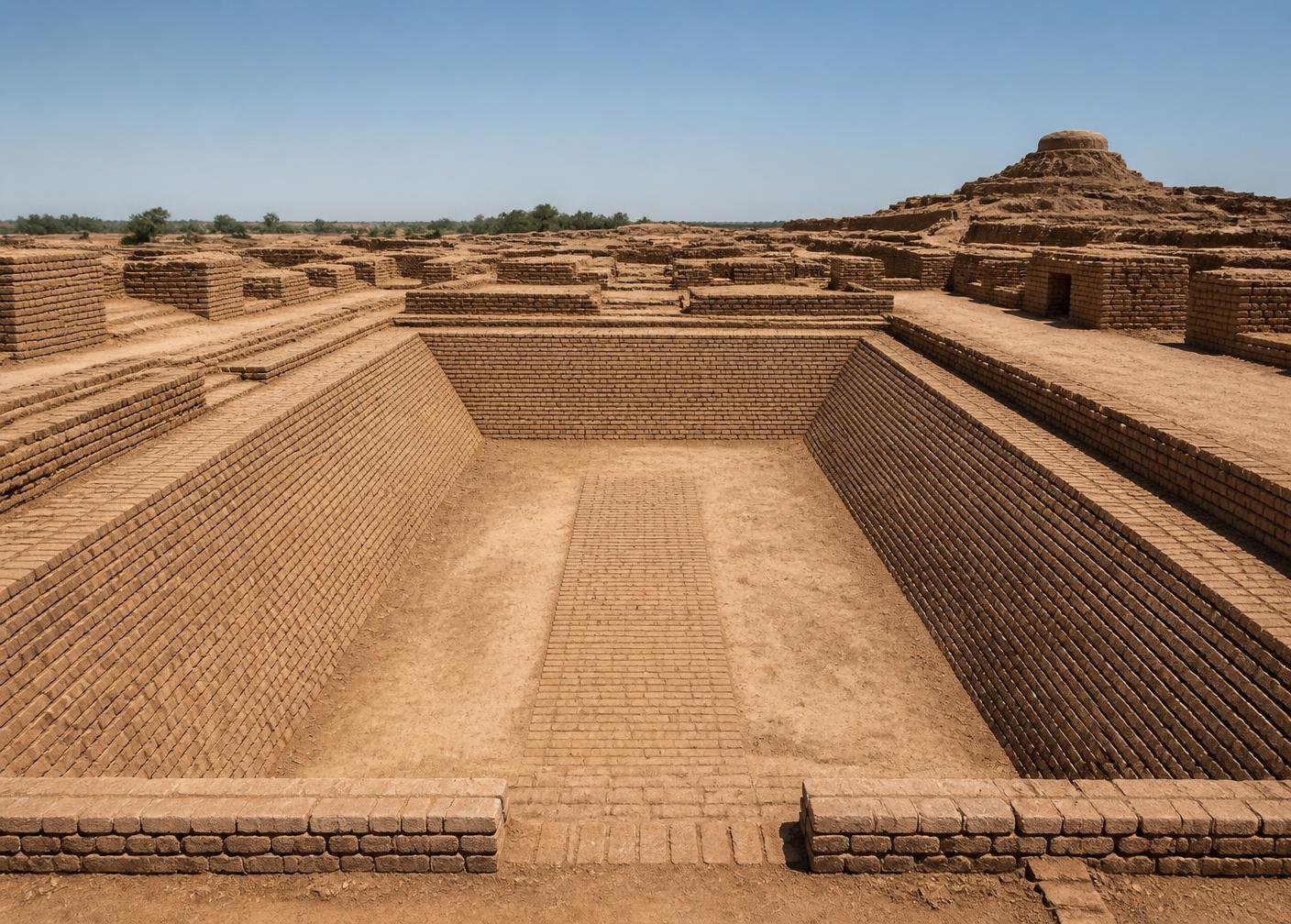
The Ancient Port City
The Ancient Dockyard
Lothal's dockyard is the site's most discussed archaeological feature: a large rectangular basin lined with kiln-fired brick, connected to a channel and equipped with an inlet and a spill-way.
Its careful construction reflects the importance of water management and maritime activity in the Harappan period, and it is widely described as one of the world's earliest known dockyards.
- Brick-lined rectangular basin
- Inlet channel and spill-way
- Adjoining warehouse platform
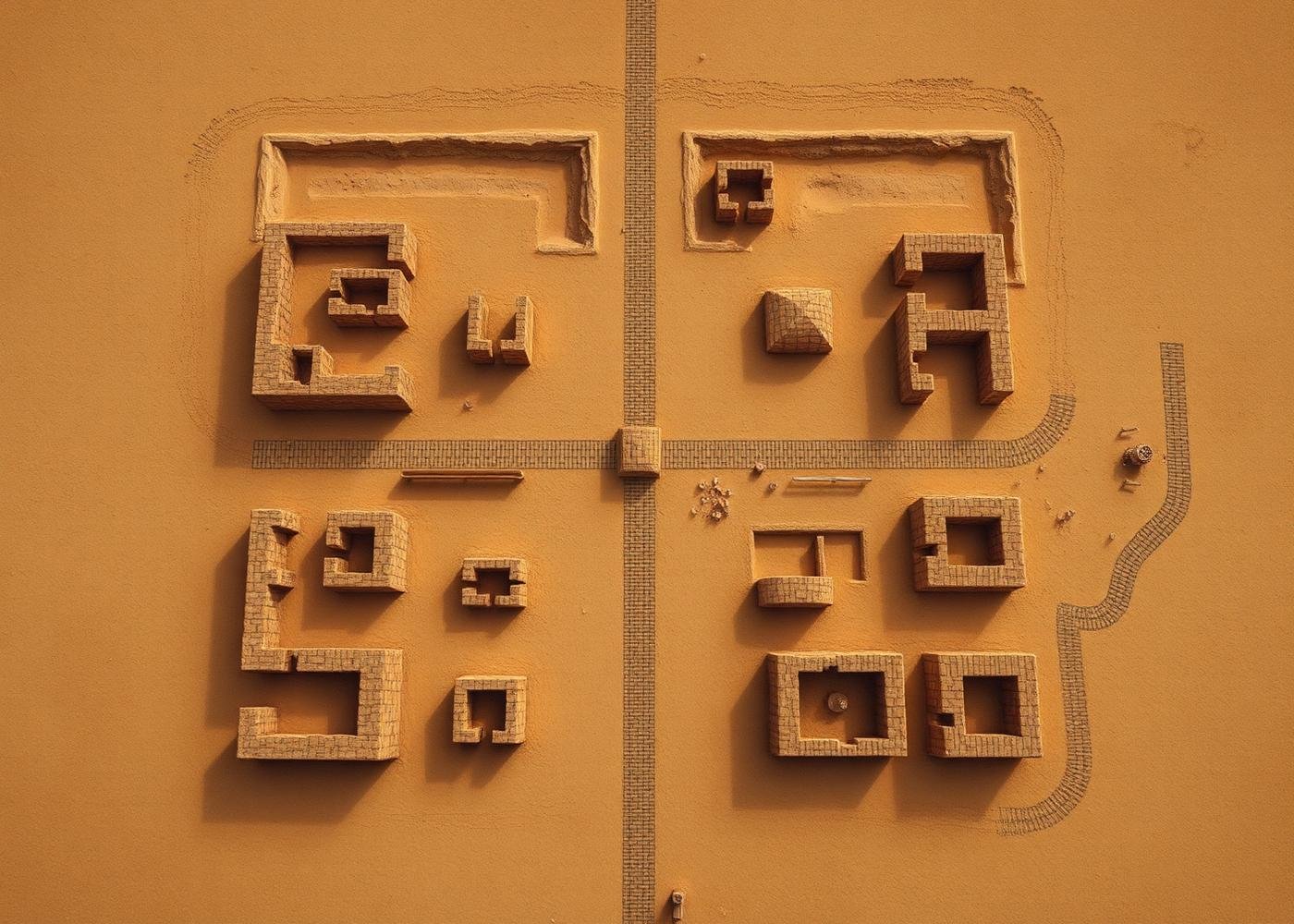
Urban Design
City Planning
Lothal was laid out on the grid-based logic characteristic of Harappan urbanism, with streets meeting at right angles and residential plots arranged in defined blocks.
Covered drains, soak pits and standardised brick sizes point to a settlement built to an agreed civic order rather than growing at random.
- Grid street alignment
- Covered drainage system
- Standardised fired brick
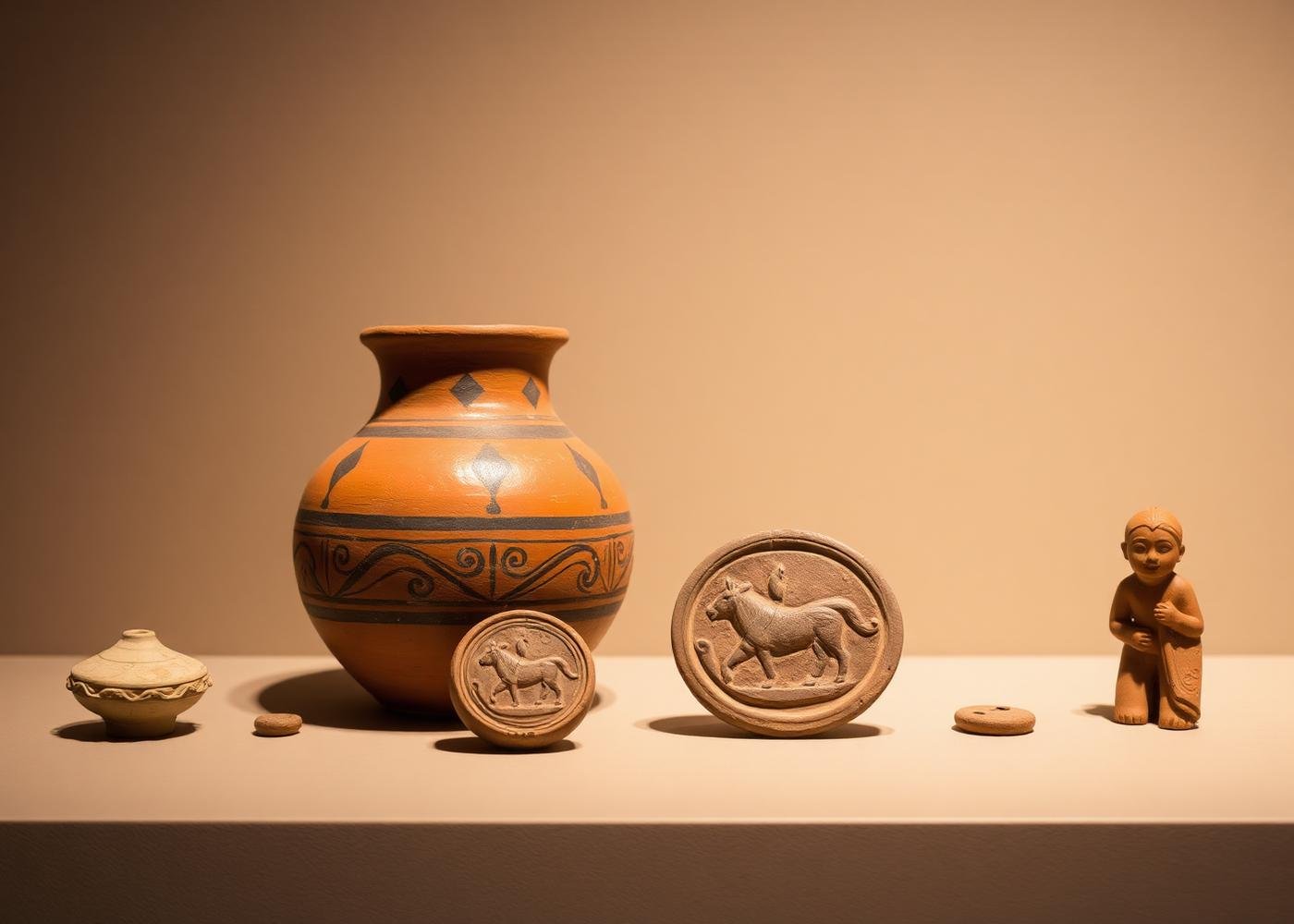
Excavation
Archaeological Discoveries
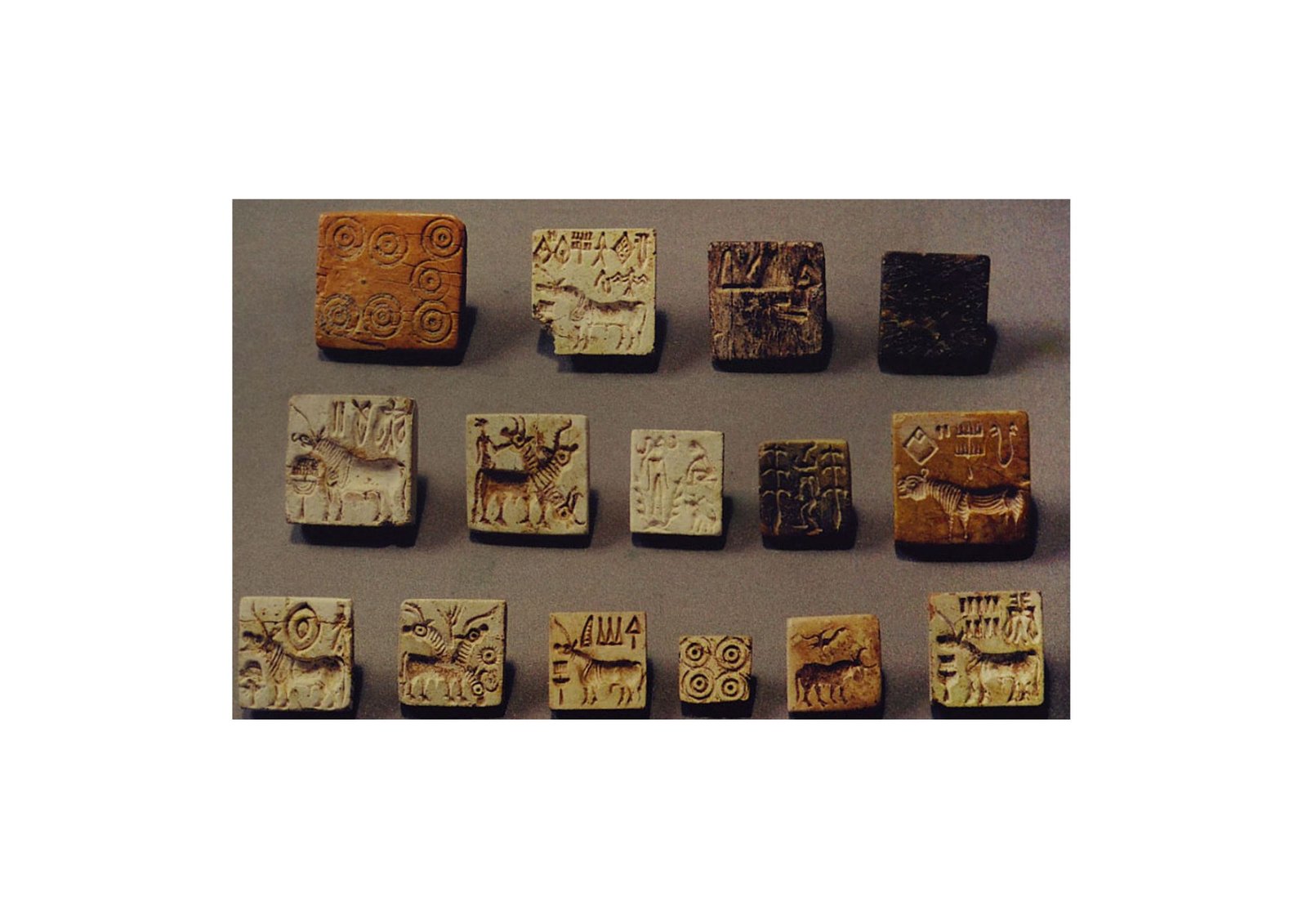
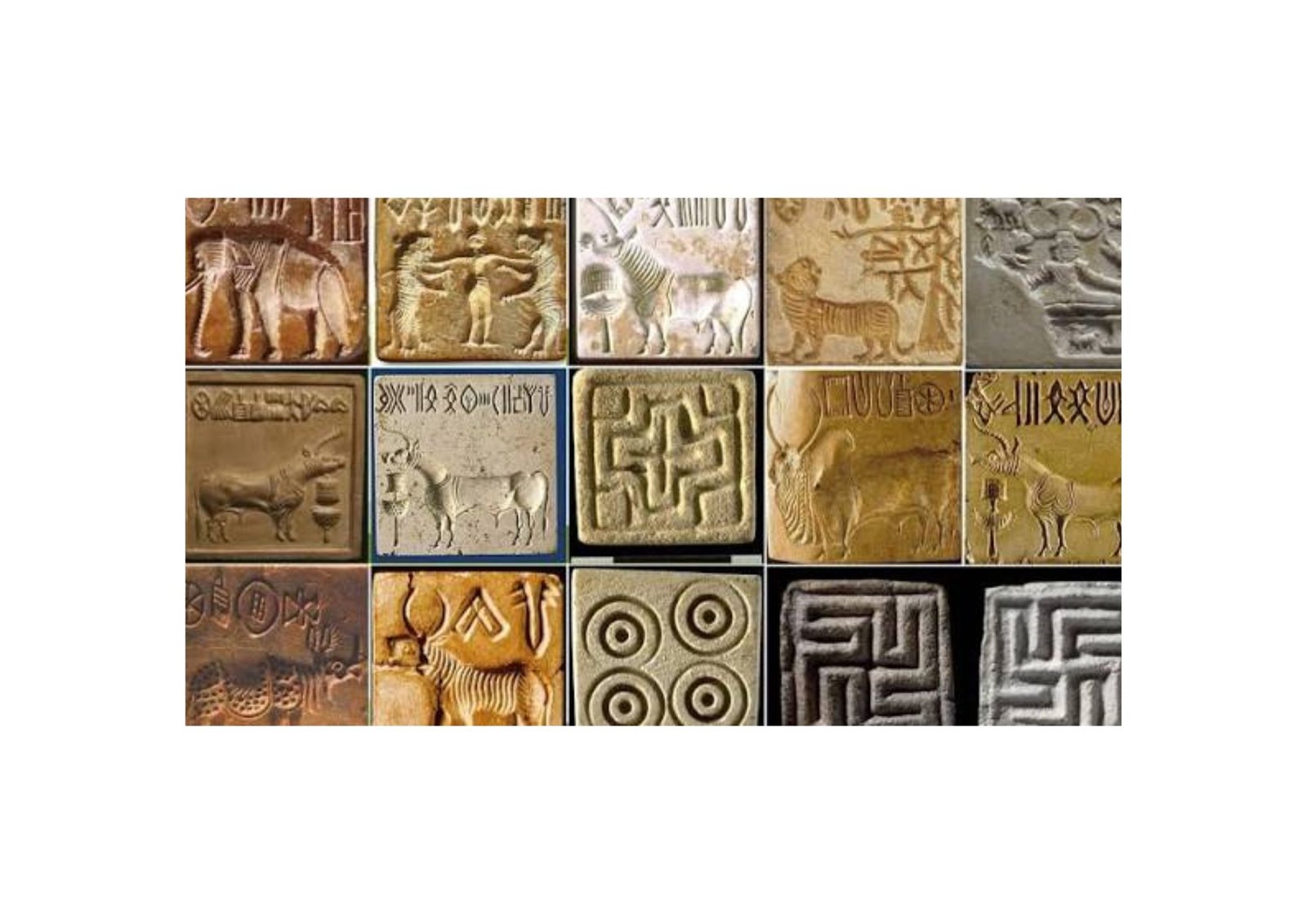
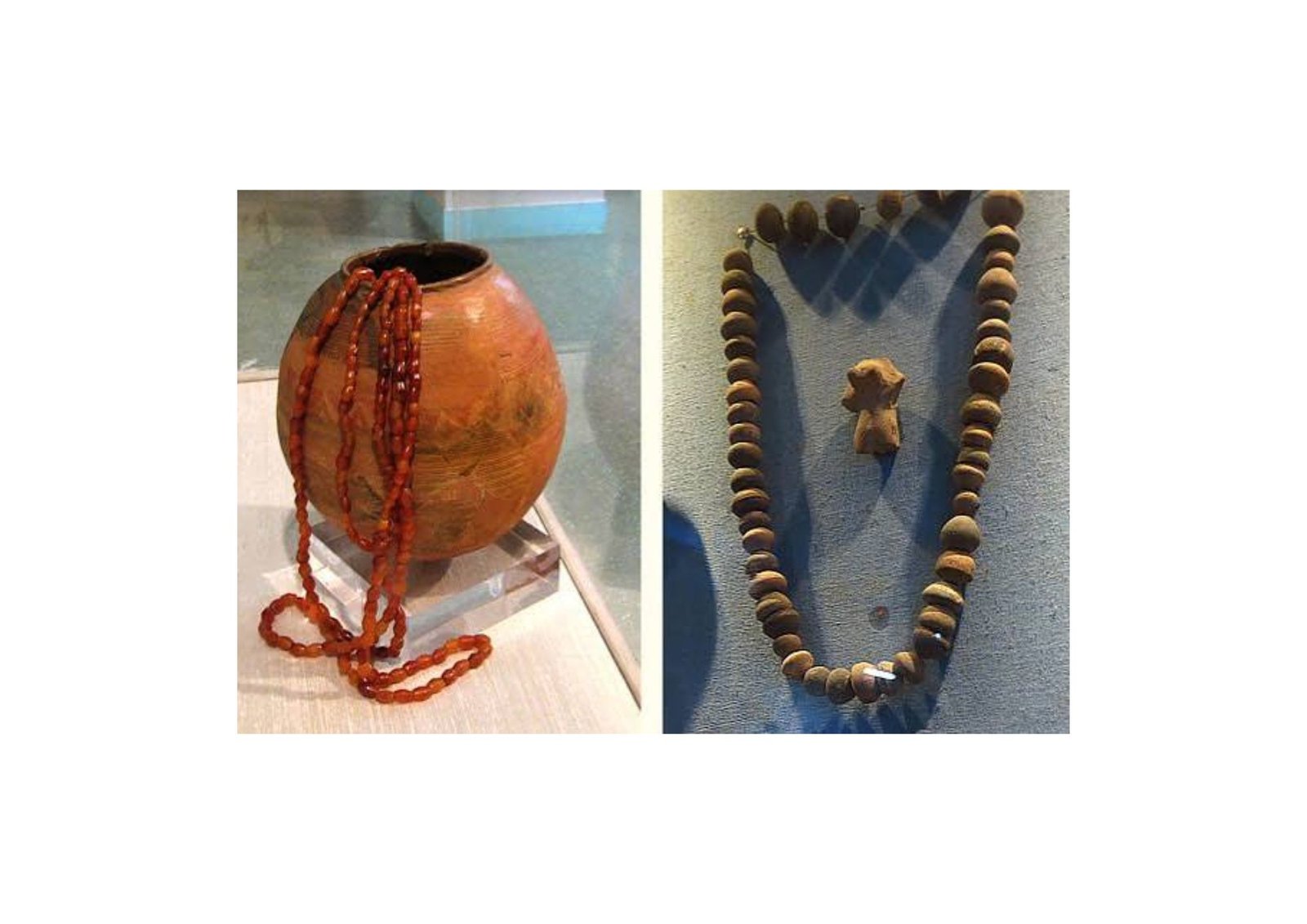
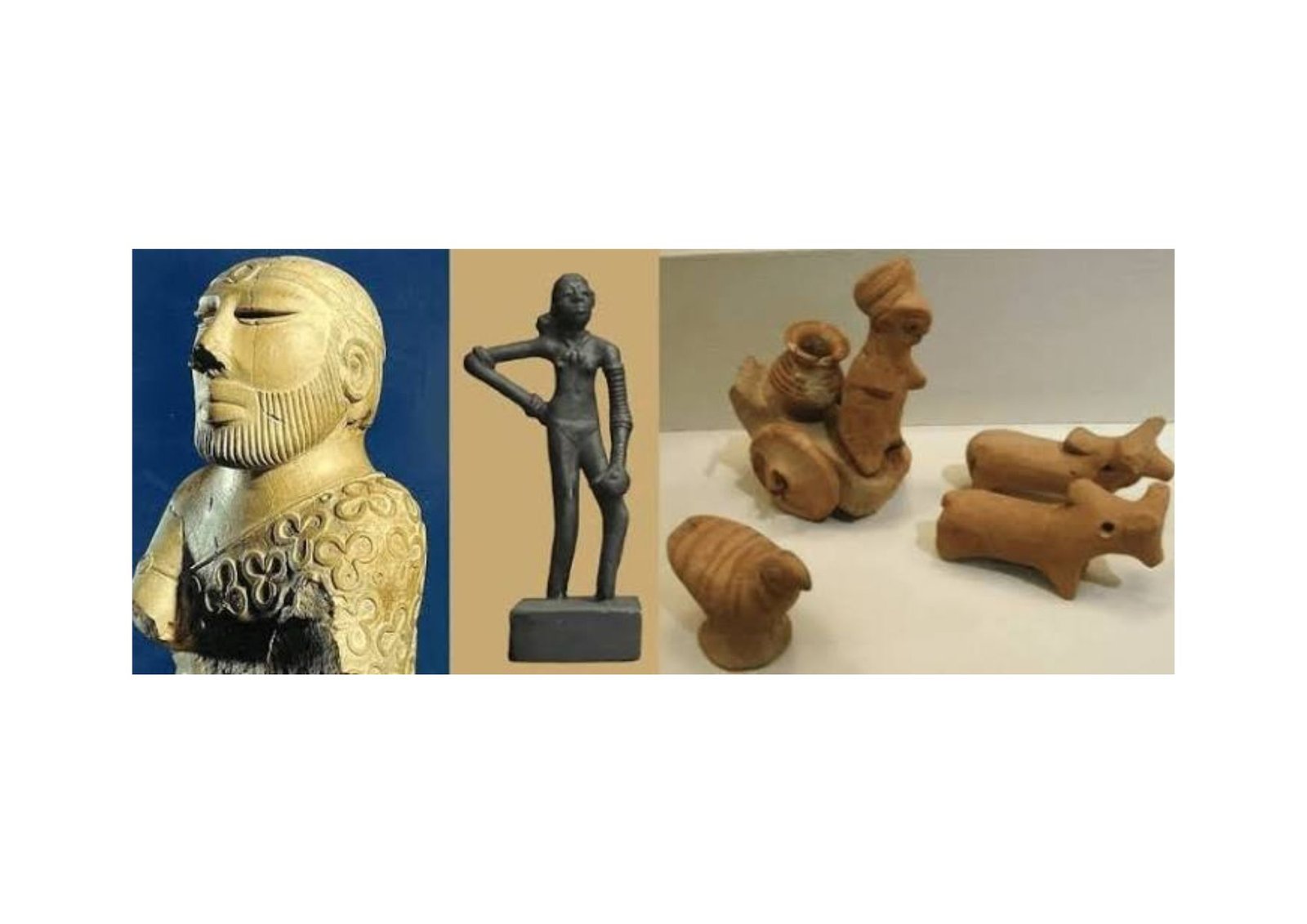
Excavations at Lothal recovered seals and sealings, standardised weights, painted pottery, terracotta figurines, ornaments and tools, alongside structural remains of houses, drains and platforms.
Together this material allows archaeologists to reconstruct daily life, administration and exchange at a Harappan coastal settlement.
- Seals and sealings
- Standardised weights
- Painted Harappan pottery
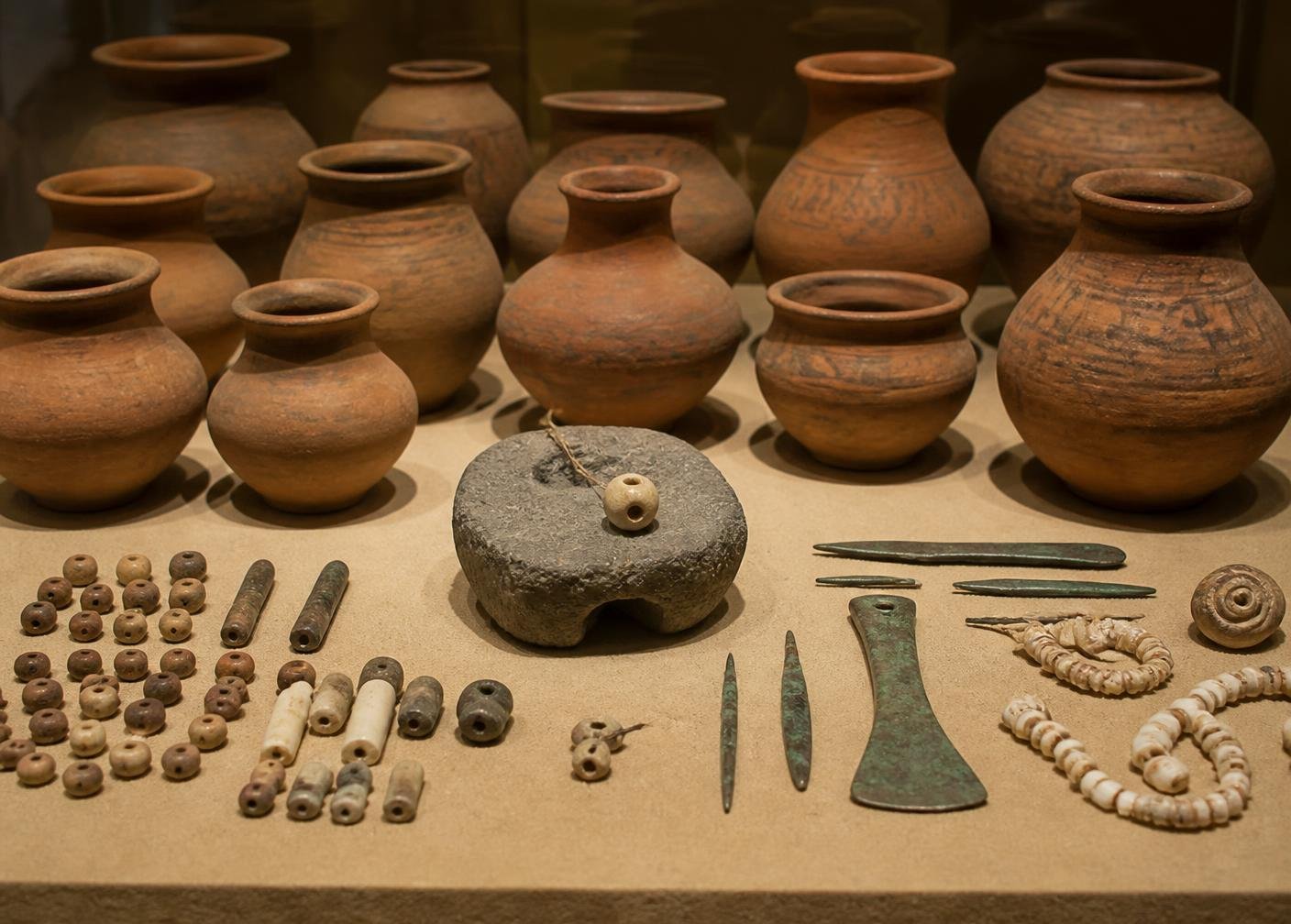
Workshops
Crafts & Industries
Lothal is closely associated with specialised craft production, above all the making of beads from carnelian, agate and other semi-precious stones.
Shell working, pottery, copper and bronze metalwork add to the picture of an organised industrial quarter serving both local use and long-distance exchange.
- Stone bead workshop
- Shell and copper working
- Kiln-fired pottery
Commerce
Ancient Trade
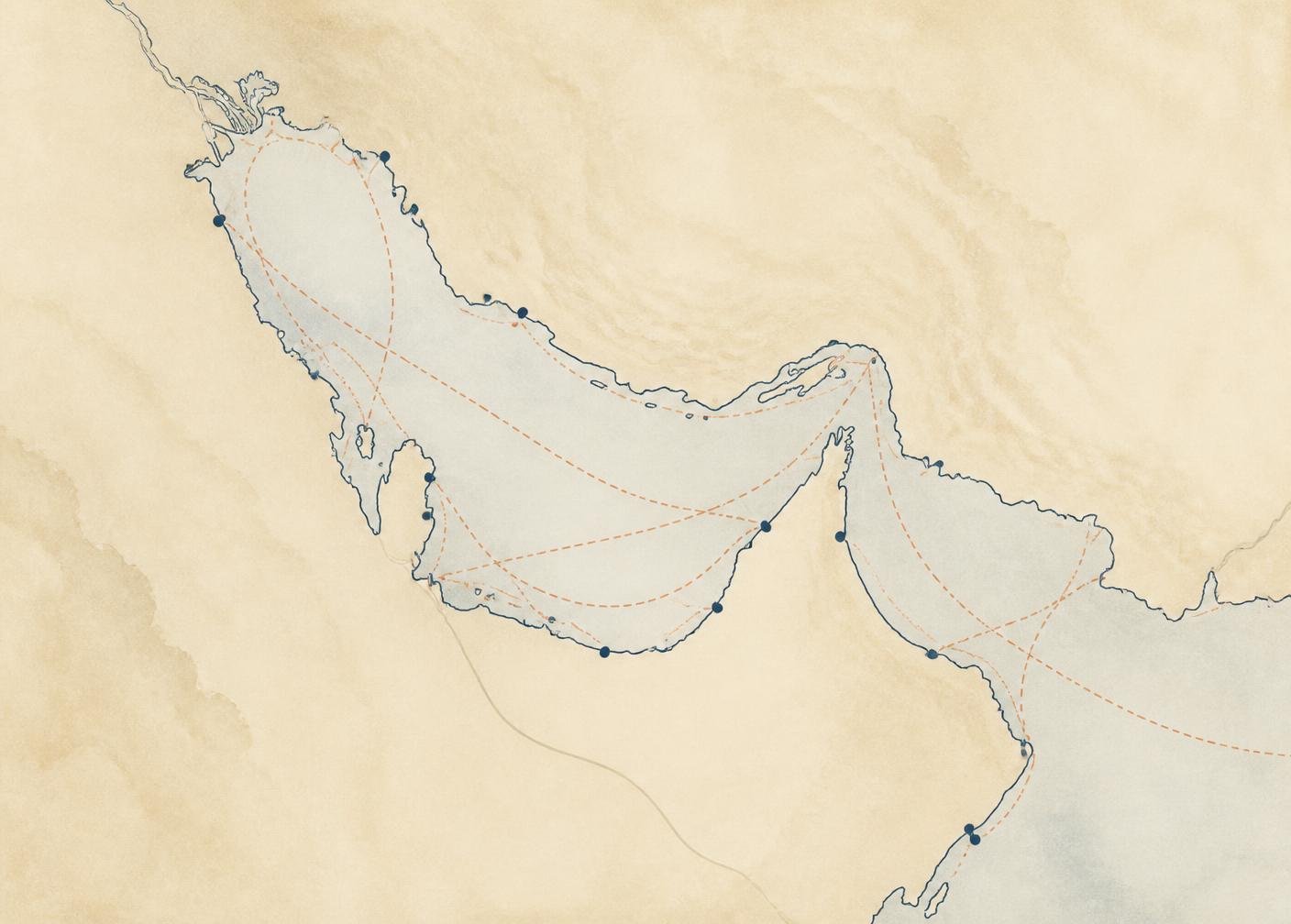
Positioned near the Gulf of Khambhat, Lothal connected the Harappan interior to coastal and overseas exchange networks.
Finished beads, ornaments, pottery and raw materials moved through the settlement, and the warehouse platform and sealings suggest a system for controlling goods in transit.
- Access to the Gulf of Khambhat
- Warehouse and sealing evidence
- Exchange in beads and raw materials
Archaeology & Artefacts
Harappan Material Culture
The material on this page summarises the Lothal publication. Interpretations of archaeological evidence are revised as research continues.